

 English
 français
 Deutsch
 español
 العربية
 中文
中文
Installing an Active Harmonic Filter (AHF) or Static Var Generator (SVG) is not simply a matter of choosing the correct current or kVAr rating. In factories, data centers, commercial buildings and infrastructure projects with multiple transformers or bus sections, the location of the equipment can directly affect compensation performance.
Should one large AHF or SVG be installed at the main low-voltage bus, or should several smaller units be placed near individual loads? The correct answer depends on the electrical topology, load distribution and project objectives.
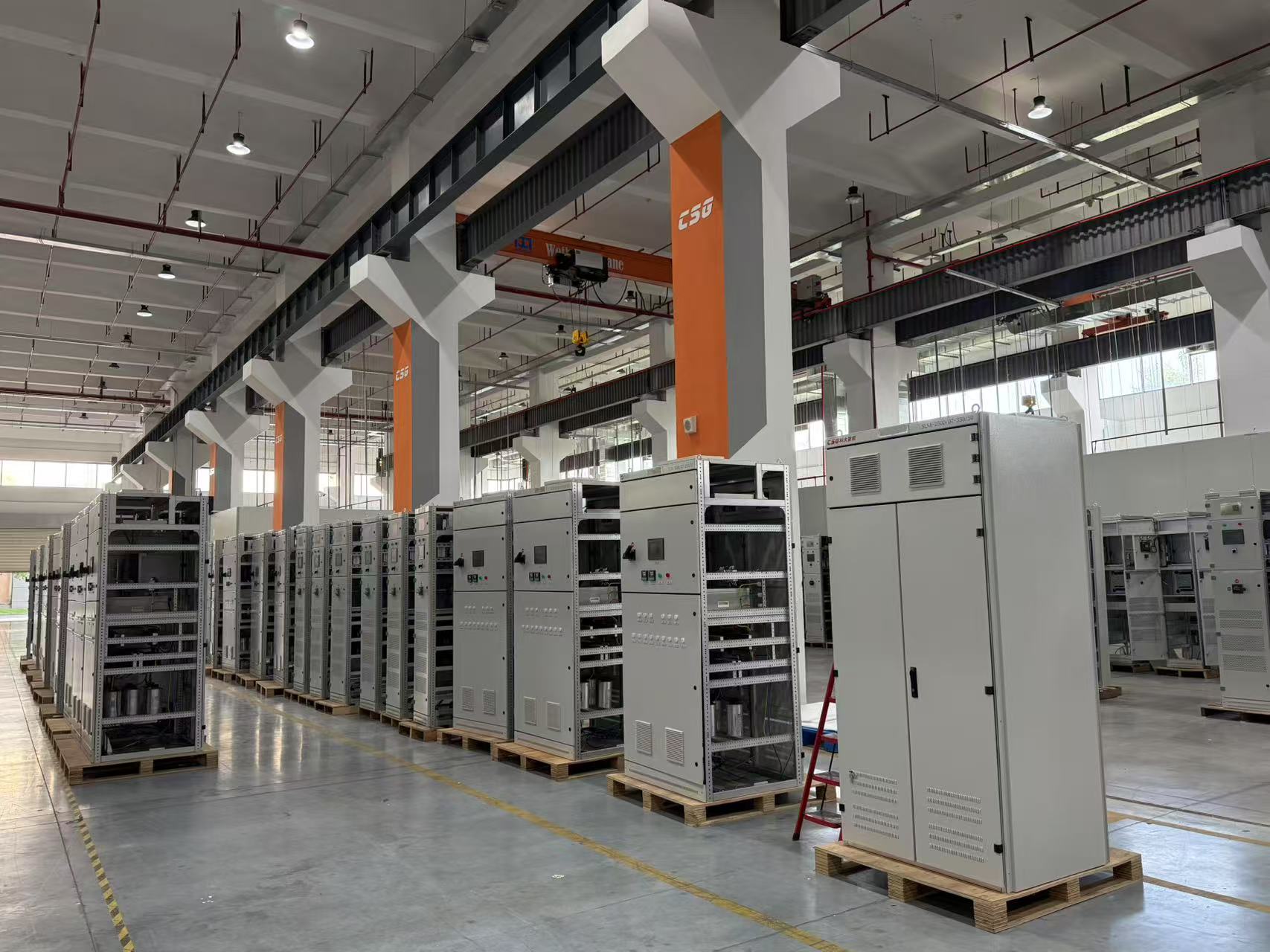
An AHF measures harmonic current and injects an equal current in the opposite phase to reduce harmonic distortion. It is mainly used for nonlinear loads such as variable frequency drives, UPS systems, rectifiers, welding machines and switching power supplies.
An SVG dynamically supplies or absorbs reactive current to improve power factor and compensate for inductive or capacitive loads. Both devices are connected in parallel with the electrical system and rely on current transformer signals for real-time control.
For either product, the measurement point must correctly represent the loads that require compensation. A suitable product installed at the wrong location may provide limited results or operate incorrectly.
Centralized compensation means installing an AHF or SVG at the main switchboard, normally close to the transformer incomer or the point of common coupling.
This arrangement can be effective when most problem loads are connected to the same bus and the electrical topology remains stable. One centralized system can monitor the total load, improve overall power factor and reduce harmonic current flowing back toward the transformer and utility supply.
Centralized installation also reduces the number of compensation panels, communication interfaces and maintenance points. It is often suitable when the project goal is to meet a power-quality requirement at the main incomer.
However, harmonic current will still flow through downstream cables and distribution panels before reaching the central AHF. If a particular production line generates severe harmonics, those downstream components may continue to experience additional heating and electrical stress.
Distributed compensation places smaller AHF or SVG units close to major disturbance sources. For example, an AHF may be installed beside a group of high-power VFDs, while an SVG may serve a rapidly changing motor or welding load.
This approach prevents harmonic or reactive current from circulating through a larger part of the distribution network. It also allows each system to be sized according to the actual characteristics of its local load.
Distributed compensation is particularly useful when loads are separated across different workshops, floors or transformer zones. If one section is shut down, the compensation equipment in other sections can continue operating independently.
The main disadvantages are the need for more installation space, additional protection devices and multiple maintenance points.
A facility with two transformers and a bus coupler requires careful analysis. When the coupler is open, each transformer and bus section normally operates as an independent electrical system. Each section therefore requires its own measurement and compensation strategy.
When the coupler is closed, the current path may change. An AHF or SVG must not receive incomplete, duplicated or conflicting CT signals. CT position, polarity, phase sequence and the relationship between the CT and compensation connection point must all be verified.
Facilities using automatic transfer switches or frequently changing bus configurations may also require control interlocking or different operating modes. Every normal and emergency switching condition should be reviewed before installation.
Many facilities benefit from a combination of centralized and distributed compensation. A branch AHF can control harmonics close to a major nonlinear load, while a central SVG manages the overall power factor of the facility. This approach combines local protection with plant-wide power-quality improvement.
Before selecting the final arrangement, engineers should review the single-line diagram, switching logic, harmonic spectrum, THDi, THDv, power factor, reactive power, phase imbalance and maximum operating current under different production conditions.
YT Electric provides modular AHF and SVG solutions for centralized, distributed and hybrid power-quality systems. By analyzing the actual electrical topology instead of relying only on transformer capacity, a more accurate, reliable and expandable compensation solution can be developed for each project.



 IPv6 network supported