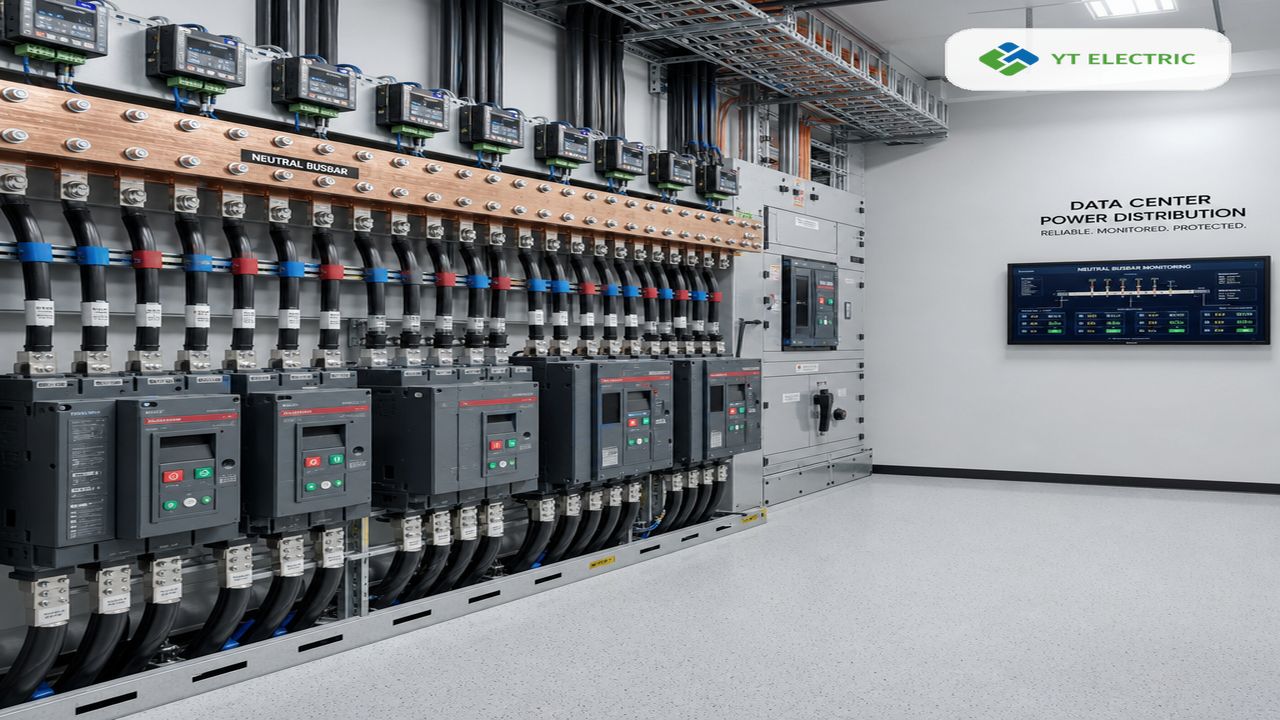
What Causes Excessive Neutral Line Current in Modern Commercial and Industrial Power Distribution Systems? Quick Engineering Answer: Excessive neutral line current in three-phase four-wire (3P4W) distribution systems is caused by two distinct physical mechanisms: (1) Linear Phase Load Unbalance ($I_N = I_A + I_B + I_C$), where unequal single-phase fundamental currents create a vector return curren...
what are the effects of harmonics on electrical systems In the intricate realm of electrical engineering, harmonics emerge as a subtle yet influential phenomenon that can significantly impact the efficiency, reliability, and safety of electrical systems. These unwanted frequencies, riding alongside the fundamental power waveform, can wreak havoc on various components and overall system perf...
Neutral Current and Single-Phase Loads Neutral current is an essential aspect to consider in electrical systems, especially when dealing with single-phase loads in a three-phase system. The presence of single-phase loads can lead to various issues related to N line current, impacting the overall power quality and safety of the system. Understanding N line Current in Systems with Single-Phase Loads...
Electricity penalty and poor power quality Penalties from Electricity Companies for Poor Power Quality Electricity companies may impose penalties on consumers for various reasons related to poor power quality events. These penalties are typically intended to encourage better power usage practices and to ensure the stability and reliability of the electrical system. Here are some common problems fo...
How does power quality affect motors? Understanding the significance of power quality in the context of motor and electrical equipment efficiency is crucial. Power quality is evaluated through several key parameters, including harmonics, voltage unbalance, and voltage fluctuations. In an alternating current (AC) system, the interaction between voltage potential and current through th...
Introduction The best distribution system is one that will, cost-effectively and safely, supply adequate electric service to both present and future probable loads. The function of the electric power distribution system in a building or an installation site is to receive power at one or more supply points and to deliver it to the individual lamps, motors and all other electrically operated devices...
Abstract This article explores the measurement of electric current using optical fibers, primarily through the Faraday effect, also known as the magneto-optic effect. Fiber-Optic Current Sensors (FOCS) offer high accuracy, modularity, and easy installation. They provide isolation of the measuring part from the primary technology and can measure inside transformers, including winding temperature. T...
Introduction Power quality is a general term used to describe the compatibility between connected equipment and its electrical supply. The supply system can be affected by changes to the frequency or amplitude of the voltage, the balance between phases on a three-phase system, and distortion levels of the original signals. The characteristics that are important and what can be tolerated by the con...


 English
 français
 Deutsch
 español
 العربية
 中文




 IPv6 network supported