Walking into a steel melting shop, you feel the raw power. Arc furnaces roar, induction furnaces hum at high frequencies, and the electricity demand is staggering. But behind this impressive industrial might lies a hidden cost – poor power quality that drains profits and threatens equipment. The Real Trouble: Reactive Power and Start-Up Mayhem Electric arc furnaces and medium-frequency induc...
In modern industrial environments, automated manufacturing lines, variable frequency drives (VFDs), dynamic robotics, and heavy inductive loads have placed unprecedented demands on power distribution networks. While investing in power quality equipment is vital to reduce downtime, avoid utility penalties, and improve energy efficiency, selecting the wrong solution can lead to costly equipment fail...
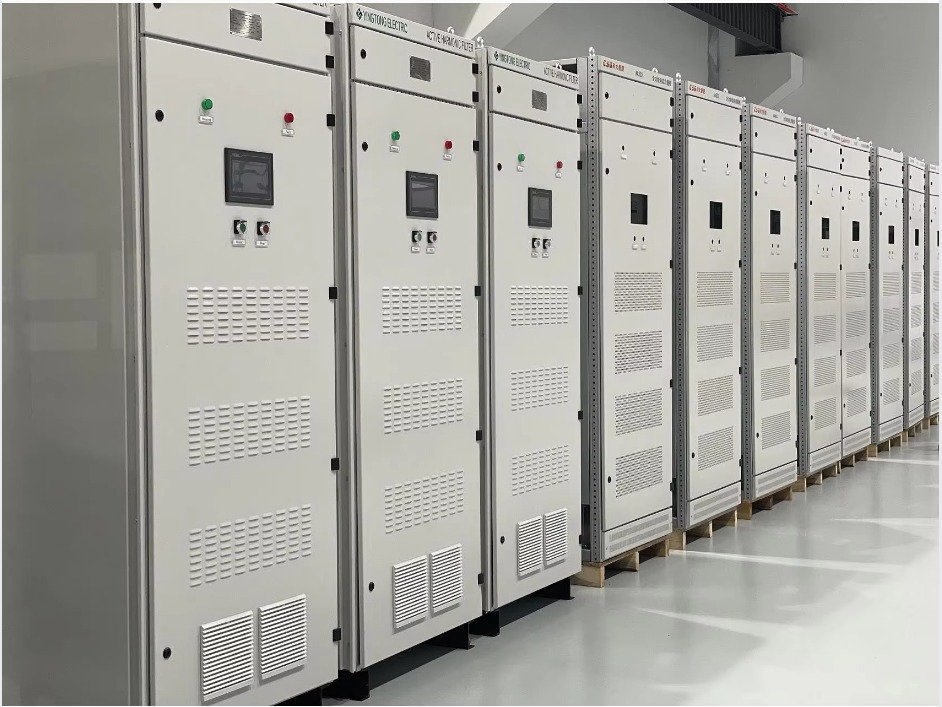
A 480 V transformer that runs within nameplate kVA can develop abnormal temperature rise when VFDs, UPS rectifiers, and switched-mode loads inject high harmonic current into its secondary bus. The transformer does not see only useful fundamental current; it carries distorted current through its windings, terminations, and neutral conductor hour after hour. An Active Harmonic Filter measures...
Hybrid SVG + Capacitor Bank Reactive Power Compensation Your capacitor bank trips once a month, the contactor welds shut, and the DISCOM bill still carries a penalty line. The 250 kVA rectifier load from your new VFDs is the reason, and adding more capacitors will make it worse. A hybrid SVG + capacitor bank system fixes the root cause instead of compensating for it. This article explains why fixe...
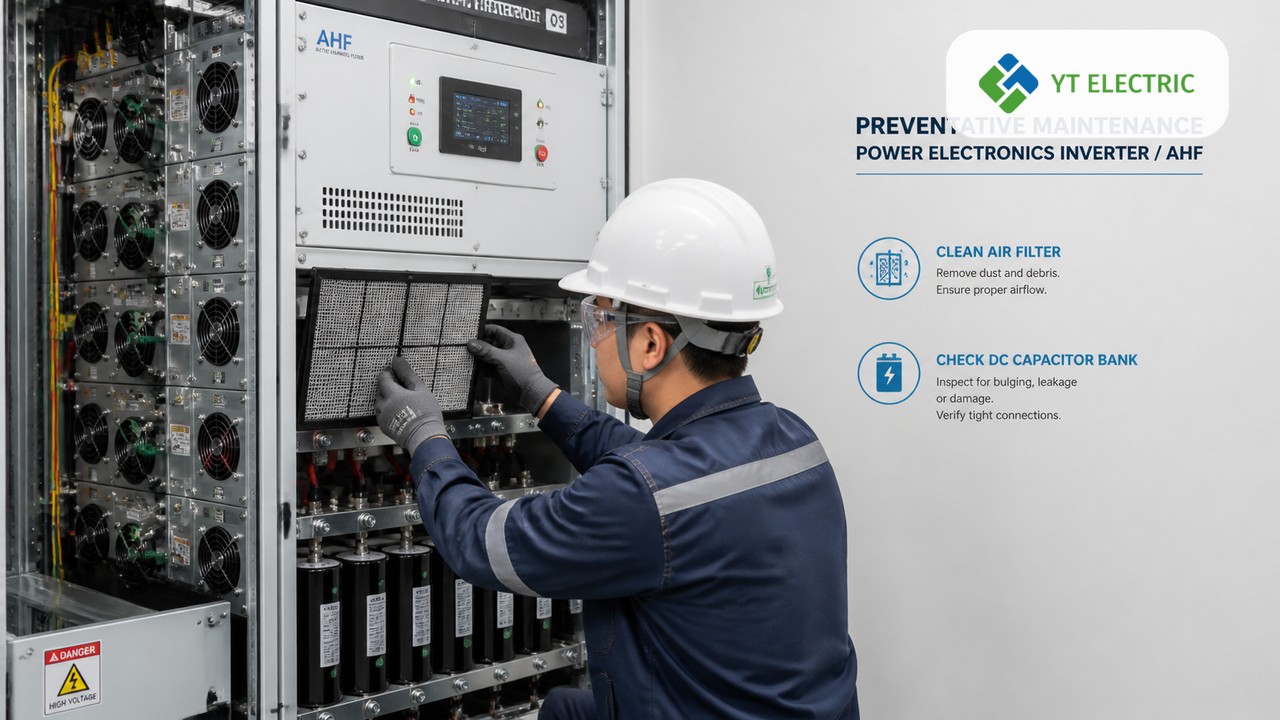
DC-Link Capacitor Aging Diagnostics, Thermal Stress Mapping, and Fan Health Monitoring in Power Quality Cabinets Quick Engineering Answer: In active power quality inverters (AHF and SVG), the DC-link capacitor bank endures severe high-frequency ripple currents ($I_{ripple} > 150\text{ A RMS}$ at 20 kHz), causing internal Joule heating ($P_{loss} = I_{ripple}^2 \cdot \text{ESR}$). When cooling f...
Even-order harmonics are current and voltage components at even multiples of the fundamental frequency — the 2nd, 4th, 6th and higher orders — that appear as asymmetric distortion in a three-phase power system. They behave differently from the familiar 3rd, 5th and 7th odd harmonics: balanced six-pulse rectifiers do not generate them, but asymmetry does. Half-controlled bridges, DC-off...
Harmonics are extra currents and voltages at integer multiples of the supply frequency that non-linear loads draw on top of the fundamental sine wave. Their effect is costly: transformers, motors and neutral conductors overheat, relays mis-trip, and equipment life shortens even below rated load. This guide covers measurement at the point of common coupling (PCC) and how to compare the main mitigat...


 English
 français
 Deutsch
 español
 العربية
 中文




 IPv6 network supported

